
Transformed Defense Software
Development Through
Product Design Leadership
Challenge
Archaic, requirements-heavy development with little user feedback led to high costs, high risk, and low user satisfaction in a complex military environment.
Solution
Taught active-duty Soldiers cross-disciplinary product development through clear career milestones, targeted training, and hands-on mentorship.
Impact
Accelerated skill development, improved product outcomes, and unlocked increased, more flexible funding for the organization
Software Practices Leadership Team
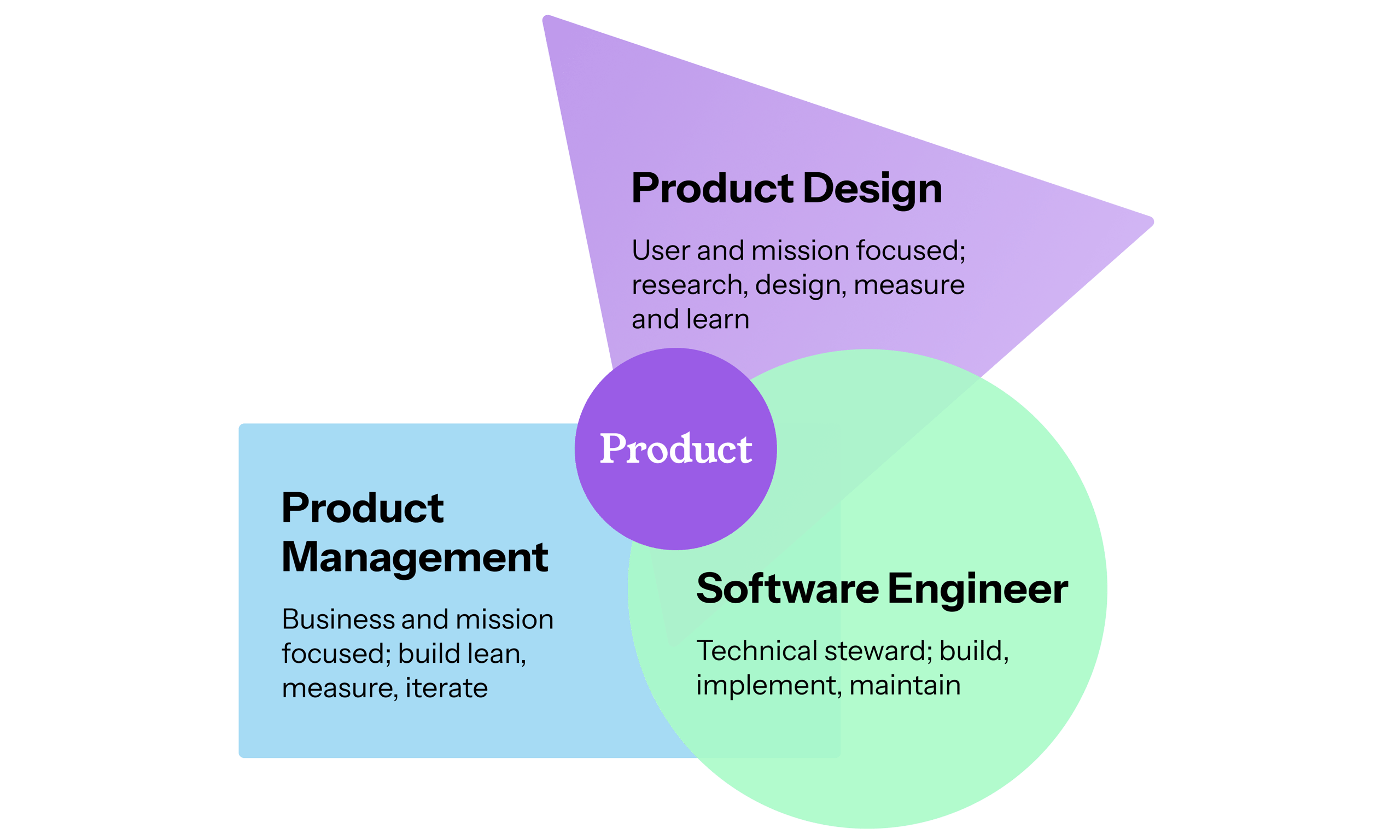
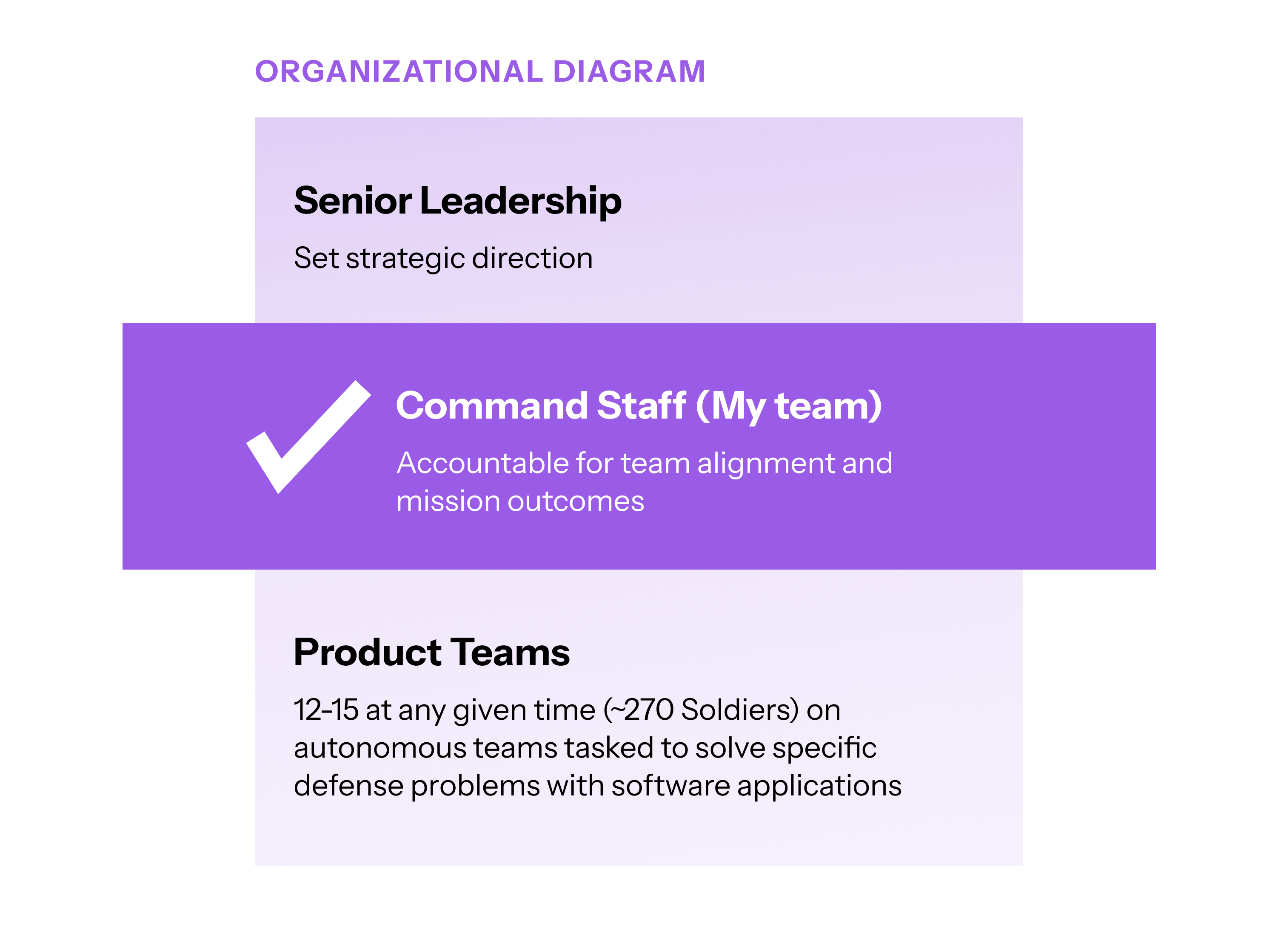
The Software Practices Leadership team, one of five command staff teams reporting below senior leadership, built communities of practice, defined career growth standards, aligned best practices, and tracked delivery performance.
The team makeup:
Chief Software Practices Officer
Product Design Leads (2)
Product Manager Leads (2)
Software Engineer Leads (2)
Leading and Scaling a Design Practice
As the lead of a 25-person Product Design Practice, I introduced a user-centered design process that enabled teams to consistently define the right problems and craft effective software solutions.
High Level Accomplishments
Oversaw and extended a custom MUI design system, adapting components to meet client-specific needs and streamline development.
I worked collectively with practice leads to improved scalable accessibility throughout the products with the Defense Innovation Unit.
Planned, designed, and taught weekly product design lessons, often collaborating with software engineering leads and product management leads where Soldier's were present to participate (15-50 participants weekly). Featured topics include healthy team collaboration, making research based decisions and running lean experiments.
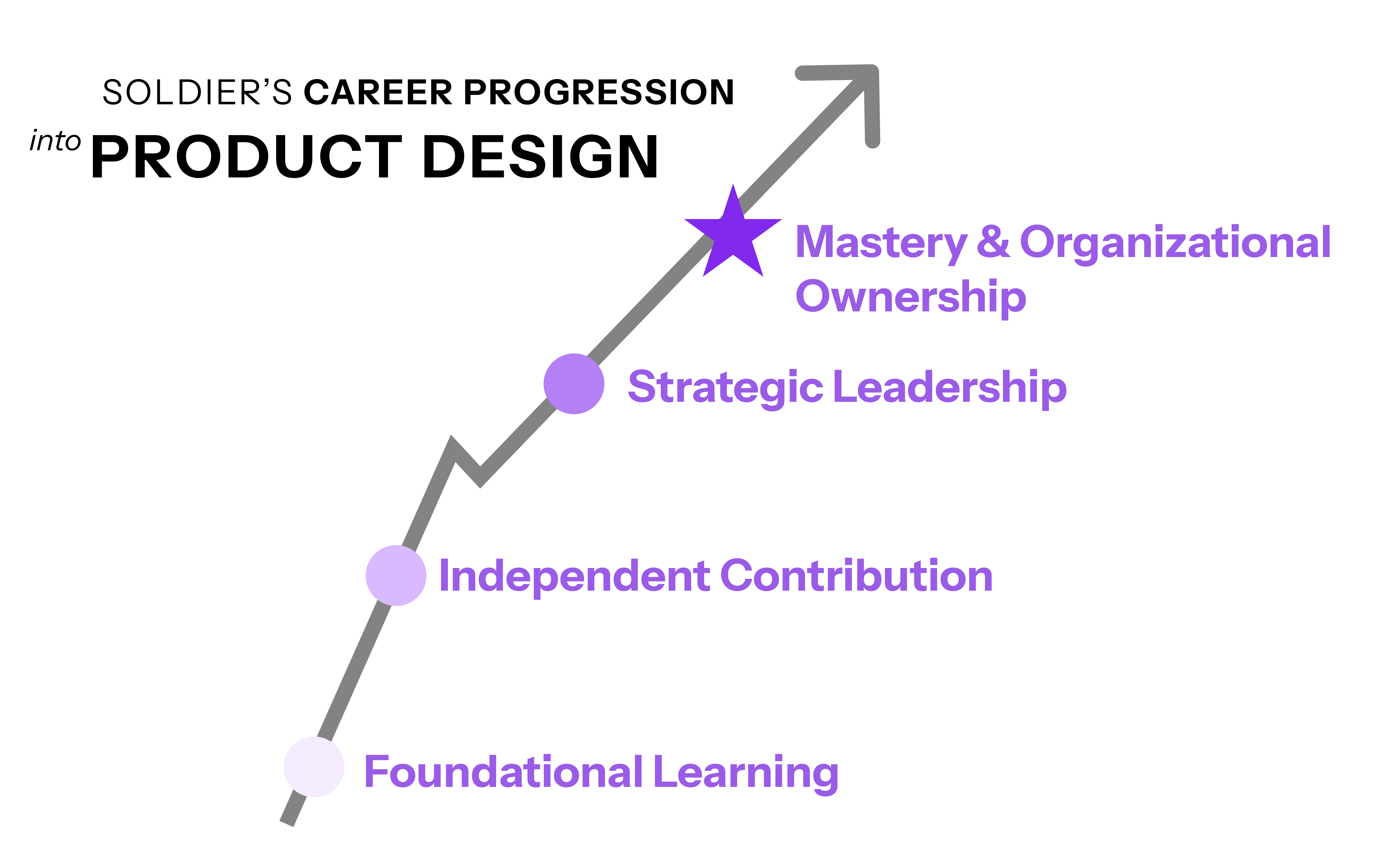
Defined growth and evaluation standards for Soldiers moving into product design roles as well designing and conducting promotion interviews every 6 months. I mentored teams on how to balance user-centered design with mission goals, work iteratively and maintain a hypothesis driven process within a complex, highly regulated environment
I accelerated professional development by partnering with leadership to track progress—resulting in 34 designers meeting or exceeding expectations within two quarters. Developed practical, approachable success criteria for product designers’ career progression.
Challenges
Adjusting the onboarding curriculum for new product designers as they arrive after a separate 6-month bootcamp prior
Determining which industry-standard product design skills were essential versus nice-to-have in this context
Navigating military bureaucracy while promoting team autonomy and user-centered thinking
Balancing the craft of design with practical mission-driven priorities
Select Software Practices Team Initiatives
•
Accelerated User Validation Through Embedded Discovery Practices
Led collaborative product discovery practices as Prodct Design Lead, embedding in teams to model lean user research and cross-functional design. Introduced practices like engineers in user interviews, research insight sessions, and stakeholder-aligned design critiques.
Impact: Over 6 months, teams began user testing 68% earlier (week 3 vs. week 9–10), enabling faster validation; measured through product review timelines.
•
Cut Ramp-Up Time by 67% for Mission-Critical Product Teams
Designed, facilitated, and led execution of onboarding curriculum for new product designers, addressing key skill gaps and accelerating readiness for mission-critical product teams. The focus was low-fidelity wireframes, early iteration testing, and Figma proficiency. Shortened the program from 3 weeks to 7 days based on learner feedback, emphasizing real user interaction and faster team integration.
Impact: Over 6 months, tracked increased independence across 3–4 designers who began leading user interviews earlier, measured through team feedback and pairing observations.
•
Reduced Audit Issues by 40% to Drive Inclusive, Compliant Products
Driving accessibility to deliver inclusive, compliant products, improving product usability for all users, expanding the potential user base, and reducing legal risk—ultimately delivering more inclusive and effective solutions.
Impact: Over 3 months, reduced accessibility issues in audits by 40%, measured through QA reporting and automated tooling.
•
Turned Peer Feedback into Scalable Skill Development
Developed design practice through community engagement, using pairing sessions and feedback to identify skill gaps, then translating insights into updated training and weekly lessons.
Impact: Resulted in a 30% increase in self-reported design confidence, measured via internal surveys and participation metrics.
Dive Deeper
This case study has been condensed for quick online viewing. A more detailed, visually presented version is available-please contact me if you're interested in learning more.